At present, the central government, as well as the governments of Liaoning Province and Dalian Municipality, attach great importance to the development of cross-border e-commerce. To gain deeper insights into the latest industry trends and further strengthen its foreign-related legal service capabilities, Matthew G.S. Ren, Managing Partner of Liaoning Sun-land Law Firm, recently led the firm’s cross-border e-commerce team on a three-day in-depth field visit to Hangzhou.
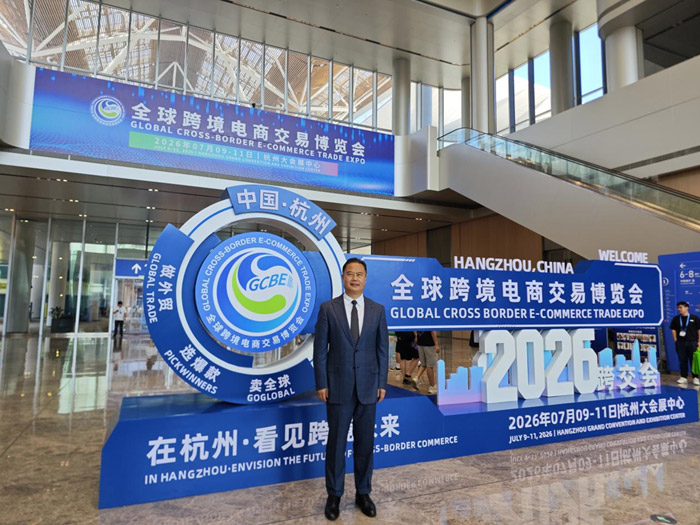
Hangzhou is where China’s cross-border e-commerce comprehensive pilot zone first began. Ten years ago, the country’s first comprehensive pilot zone for cross-border e-commerce was established here. Ten years later, the decision to hold this major industry event in Hangzhou reflects, in one sense, that China’s cross-border e-commerce sector has moved from the stage of “experimentation” to the stage of “establishment.” At the core of this new stage is rules.
This field visit focused on “rules, compliance, and global resource connectivity.” The Sun-land cross-border e-commerce team mainly participated in the 2026 Global Cross-Border E-Commerce Trade Expo. The Expo attracted more than 40 major global cross-border platforms, including Amazon, TikTok Shop, SHEIN, Temu, Noon, Mercado Libre, Ozon, and Lazada. Almost all leading cross-border platforms were present at the event. The exhibition halls were crowded with visitors, and conversations in different languages could be heard everywhere — English, Russian, Arabic, Spanish, and Portuguese. The entire venue felt like a miniature global marketplace.
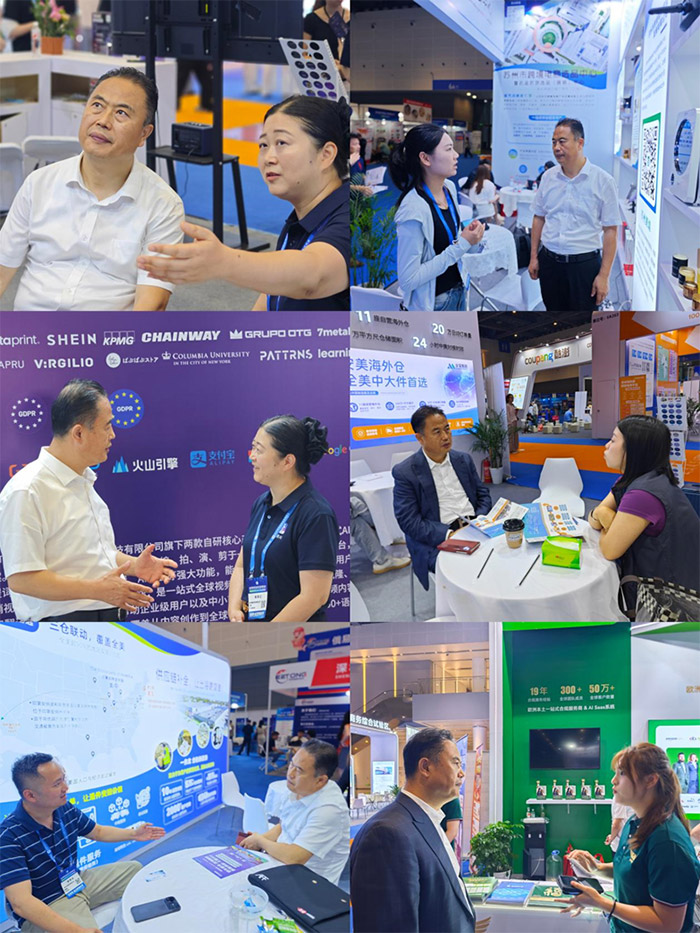
Through this Expo, Sun-land’s cross-border e-commerce team gained a clear understanding that compliance is not only required of sellers, but of every participant across the cross-border e-commerce ecosystem. Each link in the chain represents a potential legal risk interface. Sellers are the end-market drivers, platforms are the channels, overseas warehouses are the nodes, tax compliance is the bottom line, and intellectual property is the moat. Without legal professionals connecting the dots across the ecosystem, each segment is effectively exposed to risk.
Platform policies are tightening. Major platforms such as Amazon, TikTok Shop, SHEIN, and Temu update their compliance requirements almost every year, covering areas from product certification to intellectual property, from tax reporting to data protection, and from advertising compliance to consumer rights protection. Platforms are not simply “managing” sellers; they are responding to regulatory pressure from different jurisdictions. Sellers that fail to keep pace with platform compliance requirements may be eliminated first, not necessarily because their products are weak, but because their compliance is inadequate.
Overseas warehouse service providers also face contractual risks. Warehousing agreements, transportation contracts, return-processing arrangements, and inventory insurance clauses may all become points of dispute at some stage. Many overseas warehouse service providers still use “generic” contract templates that have not been localized for the legal environments of different countries.
Tax and financial compliance service providers are becoming increasingly specialized. VAT, GST, customs duties, transfer pricing, and permanent establishment determination each involve a comprehensive body of international tax law knowledge. The long queues at the Expo showed that sellers’ demand for tax compliance has shifted from passive response to proactive planning.
Intellectual property agencies are also moving from simple “registration” to strategic “portfolio planning.” In the past, sellers mainly approached agents to register a trademark. Today, more sellers are asking for global trademark portfolio strategies, patent risk alerts, and platform complaint response plans. Intellectual property services are evolving from single-point services into systematic solutions.
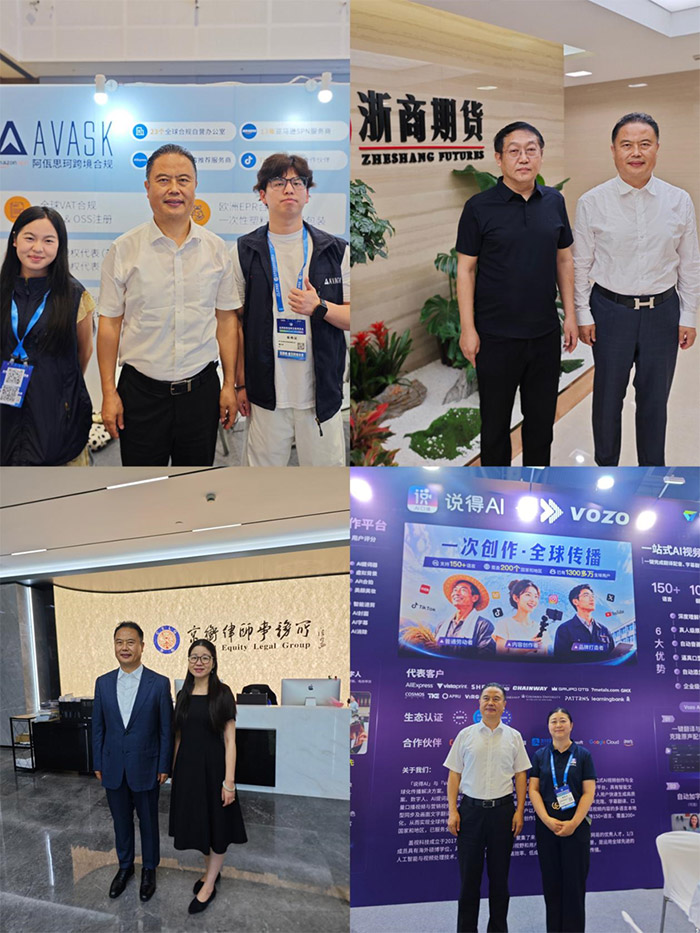
During the field visit in Hangzhou, Sun-land’s cross-border e-commerce team held professional exchanges with Zhejiang Jingheng Law Firm, Zhejiang T&C Law Firm, Tiantong & Partners Hangzhou Office, Mishcon de Reya LLP from the United Kingdom, Zheshang Futures, and other institutions. The parties engaged in in-depth discussions on key topics including the recognition and enforcement of foreign arbitral awards in China, cross-border dispute resolution mechanisms, the coordinated development of international commercial legal services, legal and compliance training for the futures market, and legal support for Chinese enterprises going global.
Three days of intensive visits gave Sun-land’s cross-border e-commerce team a deeper understanding that cross-border e-commerce is no longer simply a business of “selling products.” Rather, it has become a systematic project through which Chinese enterprises participate in global competition. The team observed that many enterprises pay a high “tuition fee” during their overseas expansion, not because their products or capabilities are inadequate, but because they lack sufficient understanding of international rules.
Through exchanges with suppliers, sellers, e-commerce platforms, logistics providers, payment service providers, overseas warehouses, tax and financial consultants, and fellow legal professionals, the team reached a shared view: the complexity and high threshold of cross-border e-commerce are precisely where Chinese enterprises can build long-term competitive advantages. As the “information gap” dividend gradually narrows, differences in awareness and compliance capabilities are becoming the key dividing line between whether an enterprise can go global smoothly, steadily, and sustainably.
In this regard, Matthew G.S. Ren noted during the exchanges:
“Compliance is not a cost, but a fundamental capability for enterprises participating in international competition. The value of lawyers is not only to help you win back losses in court or arbitration, but to help you avoid, before departure, the places where you may lose.”
Cross-border e-commerce does not lack opportunities, and China does not lack sellers. What is lacking is judgment. At the core of judgment lies respect for, and the ability to apply, rules.
Based on the insights gained from this field visit, Liaoning Sun-land Law Firm will further clarify the direction of its service upgrade.
First, AI is reshaping the boundaries of cross-border compliance. AI-powered product selection, AI customer service, AI livestreaming, and AI pricing each bring new legal risks. On the basis of its traditional foreign-related legal services, Sun-land needs to build professional capabilities in AI compliance, which will be an important growth area over the next three to five years.
Second, global resource connectivity is a core competitive strength. As Vice President of the Association of European Attorneys (AEA), Matthew G.S. Ren has access to a global network covering 151 countries, 1,521 offices, and more than 9,000 lawyers. This is a unique resource advantage for Sun-land. When sellers, logistics providers, overseas warehouses, platforms, and other participants encounter disputes overseas, Sun-land will be able to connect them with local lawyers in the relevant jurisdiction within 24 hours.
Third, Sun-land will accelerate the development of its “100 Questions on Global Cross-Border E-Commerce Compliance” video series and the publication of 100 Questions and Answers on Global Cross-Border E-Commerce Compliance. Information is not the same as awareness, and awareness is not the same as judgment. But without sufficient information, sound judgment is impossible. Turning past lessons and common pitfalls into systematic knowledge products, so that newcomers no longer have to pay high “tuition fees” for experience, is one of Sun-land’s current priorities. As the next step, Sun-land will work with Hangzhou Geshitech to launch a cross-border e-commerce compliance legal service product covering nearly 200 countries and regions worldwide.
As a professional law firm based in Liaoning and deeply engaged in foreign-related legal services, Sun-land pays particular attention to how international best practices can be integrated with local industrial strengths. We believe Liaoning has a strong manufacturing foundation, port and logistics advantages, and a strategic location in Northeast Asia. It has both the potential and the capability to write its own remarkable chapter in the new landscape of cross-border e-commerce.
China has hundreds of thousands of cross-border sellers operating in more than 100 countries and regions. What they need is not merely consultation at an exhibition booth, but a systematic, accessible, and sustainable cross-border legal service network. This is exactly what Sun-land aims to build. Our goal is not simply to set up a booth at trade fairs, but to deliver the concepts, tools, and resources of compliance services to every enterprise that needs them.
Sun-land will strive to serve as a “legal navigator” for enterprises, helping them move from “daring to go global” to “knowing how to go global,” and from “competing on price” to “competing on rule-based capabilities.” It will serve as a “stabilizer” for industry by reducing the risks and trial-and-error costs of overseas expansion through professional and front-loaded legal services. It will also serve as a “connector” for opening-up, helping Liaoning become a leading hub for cross-border e-commerce compliance services in northern China and contributing the strength of Liaoning lawyers to the development of the local open economy.
In 2026, Sun-land Law Firm marks its 31st anniversary. Starting from Dalian, Sun-land will continue to deepen its foreign-related legal services, safeguard enterprises in their cross-border expansion, and fulfill its responsibility to provide legal support for Chinese companies going global.
Cross-border expansion is a long-term discipline. Entrepreneurs are exploring the frontlines, platforms are reshaping the rules, governments are improving the ecosystem, and what Sun-land lawyers must do is build bridges between rules and business, and provide support between risks and opportunities. We firmly believe that Liaoning’s industrial strength will move more steadily and further forward in the wave of Chinese enterprises’ globalization, and that more Chinese companies will step onto the world stage with a clear understanding of rules and a sound compliance system.